

Quick Summary
To spot quality replica jerseys, check the crest, sponsor placement, fabric feel and inside labels. A well-made replica has sharp badge detail, clean printing, lightweight polyester and clear care information.
- Check the crest for sharp detail, clean edges and no blurred lettering.
- Feel the fabric: quality replicas are lightweight polyester, not stiff or plasticky.
- Look for clear care and manufacturer labels, not blank or hand-written tags.
- Treat a price far below the market as a reason to check everything more carefully.
- Buy from an official or reputable retailer and ask for detailed photos before purchase.
Table of Contents
- What a Quality Replica Jersey Should Look Like
- Authentic vs Replica Jersey Soccer: Key Differences
- Fabric, Stitching and Construction Checks
- Crests, Badges, Names and Numbers: Printing Methods to Inspect
- How to Tell If a Jersey Is Authentic or Replica: A Step-by-Step Checklist
- Buying Safely: Marketplaces, Secondhand Items and Verifying Sellers
- Choosing Your Next Jersey at JR Sporting Goods
- Frequently Asked Questions
What a Quality Replica Jersey Should Look Like
Last Updated: November 10, 2026
Most shoppers searching for how to spot quality replica jerseys want one answer fast: does this shirt look and feel like the real thing? A good replica is a well-made fan shirt with the right club or national-team design, clean printing and stitching that holds up. Before comparing fakes, you need a clear picture of what a solid replica looks like in hand.
At JR SPORTING GOODS, we start every inspection with the basics: the badge, the sponsor placement, the fabric and the labels. Those four checks tell you more than any single detail.
Look at the crest first. A quality replica shows a sharp, evenly coloured badge with clean edges and no blurred lettering. The sponsor logo should sit where the team kit places it, sized correctly and printed or stitched without gaps.
Next, feel the fabric. Our Belgium, Brazil and Argentina FIFA World Cup replicas are made from 100% polyester with a slim fit and moisture management. A jersey that feels stiff, heavy or plasticky deserves a closer look.
Finally, check the inside. A proper replica carries clear care and manufacturer information rather than a blank or hand-written tag.
Watch out: a low price alone does not prove a shirt is fake, but a price far below the rest of the market should make you check everything else more carefully.
Authentic vs Replica Jersey Soccer: Key Differences
If you are asking how to tell if a jersey is authentic or replica, the honest answer is that the two are built to different standards. An authentic match shirt is the version worn by players, with a more technical cut and higher-spec materials. A replica is the fan version, designed to look like the kit at a lower price.
Much of the difference shows up in the details. Neither is automatically fake. A replica sold through an official or reputable retailer is a legitimate product.
Here is a quick comparison to help you decide what you are looking at:
| Feature | Authentic Match Shirt | Quality Replica | Counterfeit |
|---|---|---|---|
| Crest | Precise embroidery | Clean print or stitch | Blurred, uneven or misspelled |
| Fabric | Technical, performance grade | Lightweight polyester | Thin, scratchy or flimsy |
| Labels | Full product and manufacturer tags | Clear care and sizing labels | Missing, blank or misprinted |
| Price | Highest | Mid-range | Suspiciously low |
| Seller | Official or authorised | Reputable retailer | Unknown or unverified |
Fabric, Stitching and Construction Checks
Fabric and stitching tell you how a jersey will behave after the first wash, not just how it looks on the hanger. The goal here is to judge construction quality, not to prove authenticity from a single detail. Work through the checks below in order, because each one narrows down what you are looking at.
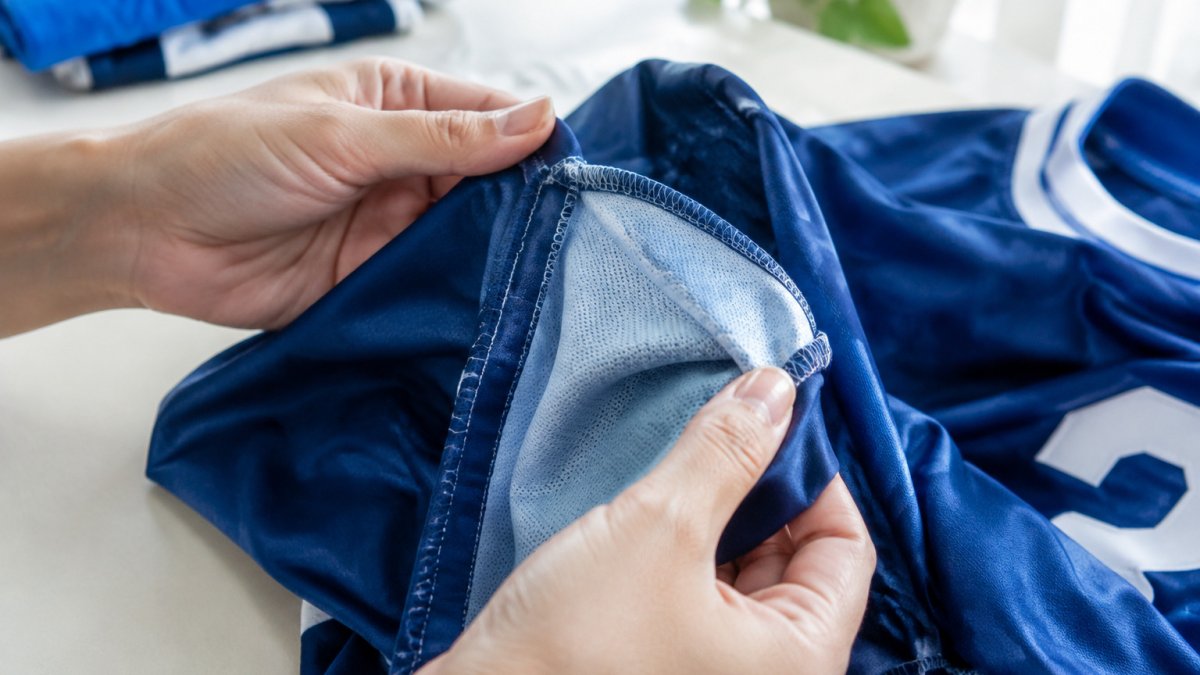
1. Fabric weight and hand-feel. Stretch the material gently in both directions. A quality replica should return to shape without thinning, going see-through, or leaving a white stress mark along the stretch line. A shirt that feels stiff, heavy, or plasticky usually points to a lower-grade polyester or a coated finish that will crack.
2. Weave and breathability. Hold the jersey up to a light source. A consistent, even weave with small ventilation holes is normal. Thin, patchy, or see-through areas, especially across the shoulders and back, are a common sign of a poor-quality fake. Breathability is hard to test in a shop, but a quality replica should let air pass through the panel when you hold it against your mouth and breathe gently.
3. Stitch type and density. Look closely at the seams along the shoulders, sleeves, side panels, and hem. Straight lines, no skipped stitches, and no loose threads are what you want. Single-needle stitching with wide gaps, or seams that pucker along the length, usually point to shortcuts in production.
4. Seam construction and finishing. Turn the jersey inside out. Check that seam allowances are trimmed, that the collar and hem are neatly finished and flat, and that there are no raw edges. Puckering, twisted side seams, or a collar that will not sit flat are practical warning signs. On a quality replica, the inside should look almost as tidy as the outside.
5. Stress points. Gently pull at the sleeve hems, the collar, and the side seams. These are the areas that fail first. A quality replica should feel secure at every stress point, with no gap opening at the stitch line.
A practical checklist for fabric and stitching:
- Stretch the fabric and confirm it returns to shape without thinning
- Check the weave for consistency and ventilation, not thin or see-through patches
- Confirm seams are straight, tight, and free of loose threads or skipped stitches
- Turn the jersey inside out and check seam allowances, collar, and hem finishing
- Test the stress points at sleeves, collar, and side seams
Care matters too. A quality polyester replica should wash well in cold water, inside out, and keep its colour and shape. If the shirt bleeds dye heavily on the first wash, or the print starts to lift after one cycle, that is a warning sign about the base fabric and the print bond, not just the dye.
Watch out: a single fabric or stitching detail is not proof of authenticity. Convincing counterfeits can use the right polyester and clean stitching, so treat these checks as quality signals and combine them with the label, crest, and seller checks elsewhere in this guide.
Crests, Badges, Names and Numbers: Printing Methods to Inspect
Printing and badge work is where many fakes are exposed. Each printing method leaves a recognisable signature, so knowing what to look for helps.
Our FIFA World Cup jerseys use fully sublimation printed designs. The colours should look vibrant and the print should feel flat, with no cracking or peeling. Heat-pressed graphics sit on top of the fabric and should be even, with edges that do not lift.
Crests and badges should show crisp detail. Zoom in on the lettering and fine lines. Blurred text, uneven outlines or misspelled words are a strong red flag. Names and numbers should be aligned straight, centred and evenly spaced. Name and number customisation is available for an extra charge.
Many buyers find that comparing a suspect jersey against a known-good replica side by side makes differences obvious.
How to Tell If a Jersey Is Authentic or Replica: A Step-by-Step Checklist
What they rarely give you is an order to check them in, and what to do when two checks disagree. Use this sequence each time you assess a jersey, whether it is in your hands or in listing photos.
Step 1, Establish what the jersey is supposed to be. Before you inspect anything, confirm the intended product: sport, league, season, manufacturer, and kit type (home, away, third, goalkeeper).
Step 2, Check the seller and the paper trail. Buy from an official or authorised retailer where possible.
Step 3, Inspect the crest and sponsor logos. Look for sharp, correctly placed branding with clean edges and no blurred lettering. Zoom in on fine lines and small text. Blurred text, uneven outlines, or misspelled words are a strong red flag.
Step 4, Examine the printing or embroidery. Confirm names, numbers, and graphics are clean, aligned, and evenly spaced. Sublimation printing should look vibrant and feel flat, with no cracking or peeling. Heat-pressed graphics should sit evenly, with edges that do not lift. Compare the font and spacing against a known-good reference where you can.
Step 5, Feel the fabric and check the construction. It should be lightweight and breathable, not stiff or plasticky. Stretch it gently, check the weave, and inspect the seams, collar, and hem as described in the fabric and stitching section above.
Step 6, Read the labels and codes. Look for clear manufacturer, size, and care information, plus any product code or authenticity marker the manufacturer uses. Blank, hand-written, or misprinted tags are a warning sign. Where a product code is present, check it against the manufacturer's own product listing or contact the manufacturer to confirm it.
Step 7, Compare the price and the story. A price far below the market should prompt extra scrutiny, but a low price alone does not prove a shirt is fake. Weigh the price against the seller, the photos, and the paper trail together.
When checks conflict. No single check proves authenticity, and convincing counterfeits exist. If the fabric looks right but the labels are wrong, or the price is plausible but the seller will not provide photos, treat the conflict as a reason to pause.
Watch out: visual inspection can narrow the field but cannot guarantee authenticity. Counterfeits are getting better, so use several checks together, keep records of the listing and the seller's answers, and buy through payment methods that offer protection.
Buying Safely: Marketplaces, Secondhand Items and Verifying Sellers
Online marketplaces and secondhand listings carry the highest risk. Before you buy, review the seller's feedback history and look for detailed listing photos that show the crest, tags and stitching up close.
Be cautious of listings that use only stock images or that refuse to send additional photos. Ask specific questions about the product code, the manufacturer and the return policy. A legitimate seller will answer clearly.
For secondhand jerseys, ask for photos of the inside tags and the back print, and check them against the checklist above. Where possible, buy from a seller who offers returns.
Choosing Your Next Jersey at JR Sporting Goods
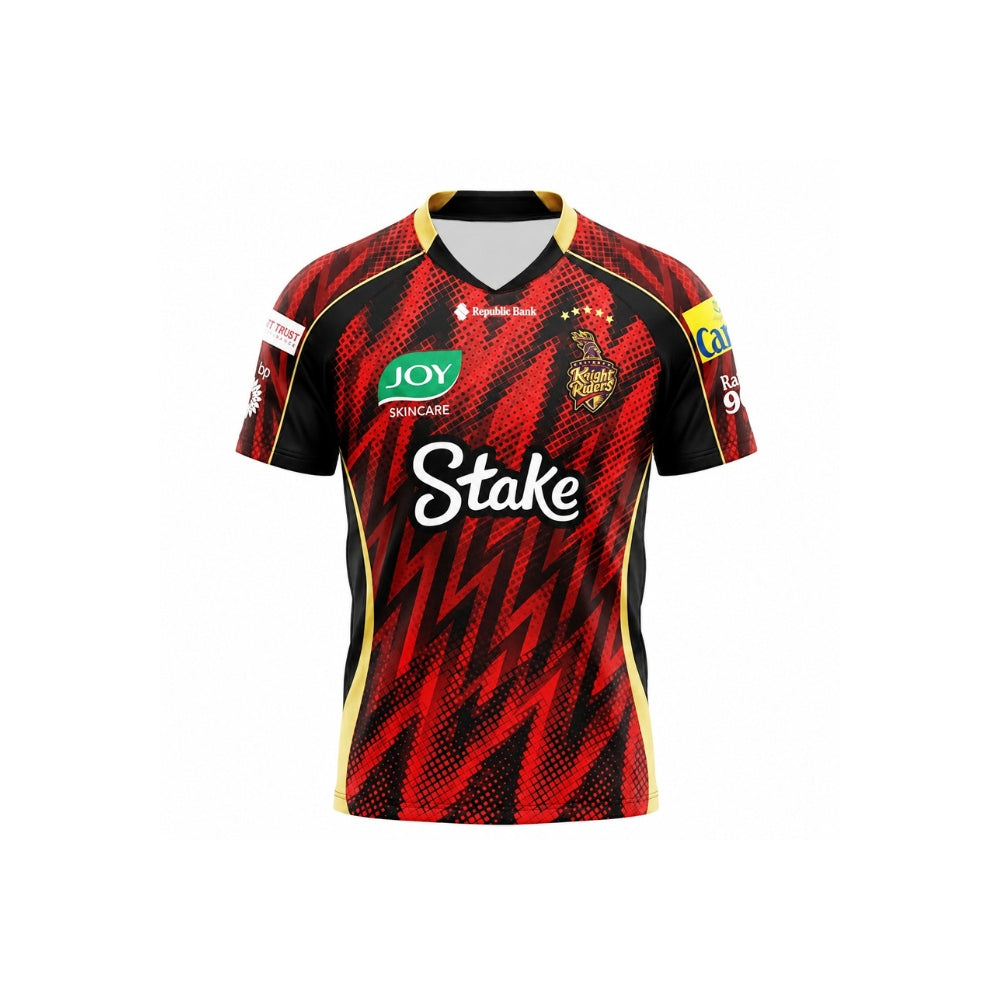
If you want to skip the guesswork, shop from a store that lists its products clearly. Our Trinbago Knight Riders TKR Jersey 2026 Replica is designed for cricket fans and players, with lightweight moisture-wicking fabric and a full sublimation print, priced at $34.99.
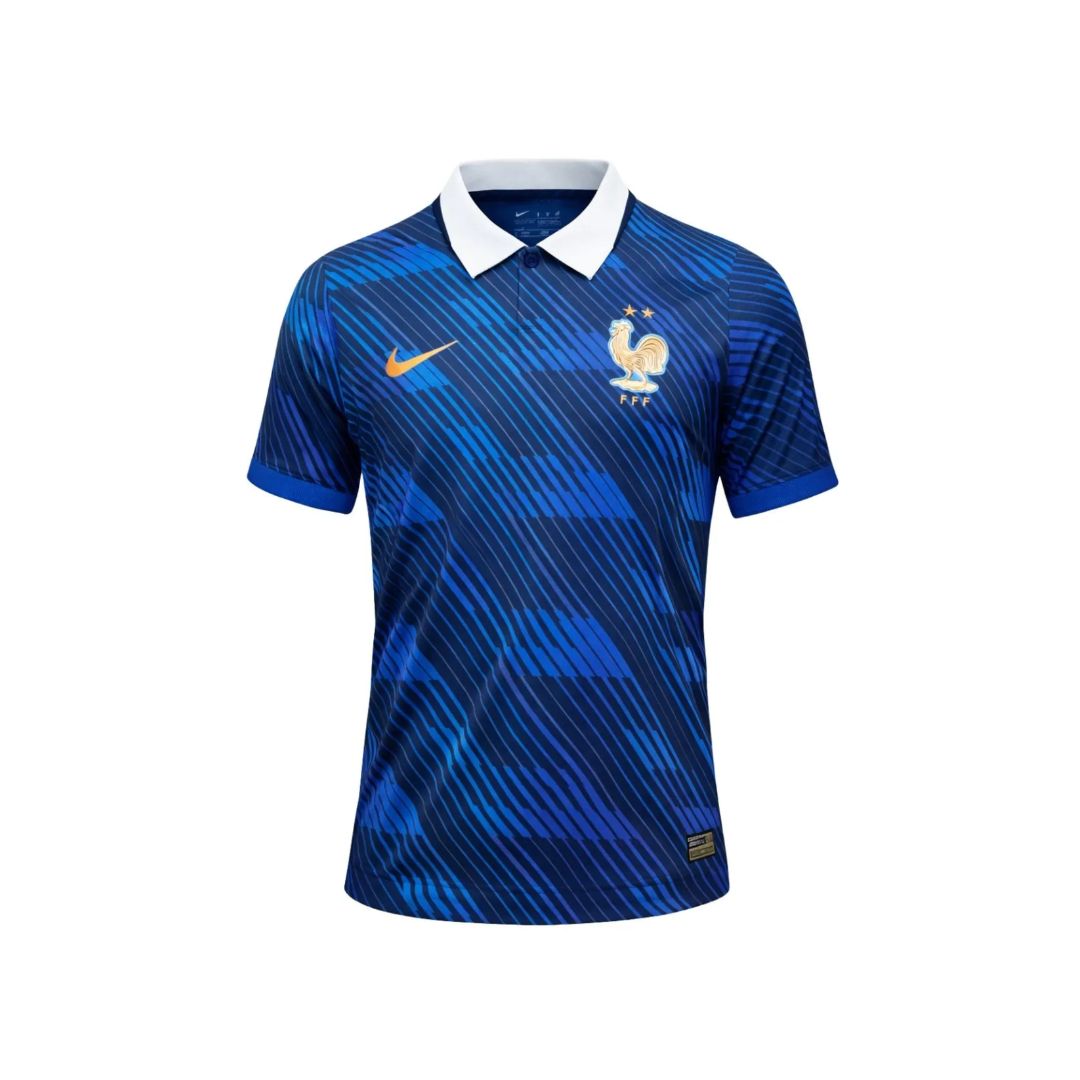
For national-team fans, our FIFA World Cup replicas include the France FIFA World Cup Jersey 2026 Replica, built from breathable 100% polyester with a slim fit. Apply the checklist above to any jersey you consider, and you will know what a quality replica looks like before you order.
Frequently Asked Questions
How do I tell if my jersey is authentic or replica?
Start with the badge, sponsor logo, fabric feel, inner tags and stitching. Authentic kits usually show cleaner embroidery or heat-pressed detail, consistent sizing labels and securely attached authenticity marks where the manufacturer uses them. Replicas can look very close, so no single check settles it. Compare several features together, and if a seller cannot provide a clear return policy or product details, treat that as a warning sign before you pay.
Are replica jerseys good quality?
Quality varies widely. Good replicas use breathable, moisture-wicking polyester, neat stitching and colours that match the team's official design. Poor ones may have thin fabric, loose threads, blurry logos or prints that fade or crack after a few washes. Judging the materials and construction before buying gives you a better sense of what you are getting than the label alone.
What should I check on a soccer jersey before buying it?
Check the crest and sponsor logos for sharp edges and accurate colours, look at the seams and collar for even stitching, and feel the fabric for weight and breathability. Confirm that names and numbers are applied cleanly. Review the product description for material and print method, and check the price, since very low prices for a current kit can signal a counterfeit.
What is the difference between an authentic and a replica soccer jersey?
An authentic jersey is the version worn by players on the pitch, usually with a more technical fabric, detailed embroidery and a higher price. A replica is designed to match the look of that shirt for supporters, typically using lighter, less expensive materials and simpler construction. Replicas are legitimate when they are licensed and clearly sold as replicas. Counterfeits imitate branding to deceive buyers.
Where can I get high-quality replica jerseys?
Buy from retailers that publish clear product details, material information, sizing guides and return terms. JR Sporting Goods lists its FIFA World Cup 2026 replica jerseys, including Brazil, Argentina, Belgium and Spain, at 34.99 to 39.99 with delivery in 3 to 4 working days and optional name and number customisation for an extra charge.
